Boswellia: Ancient Resin, Modern Science
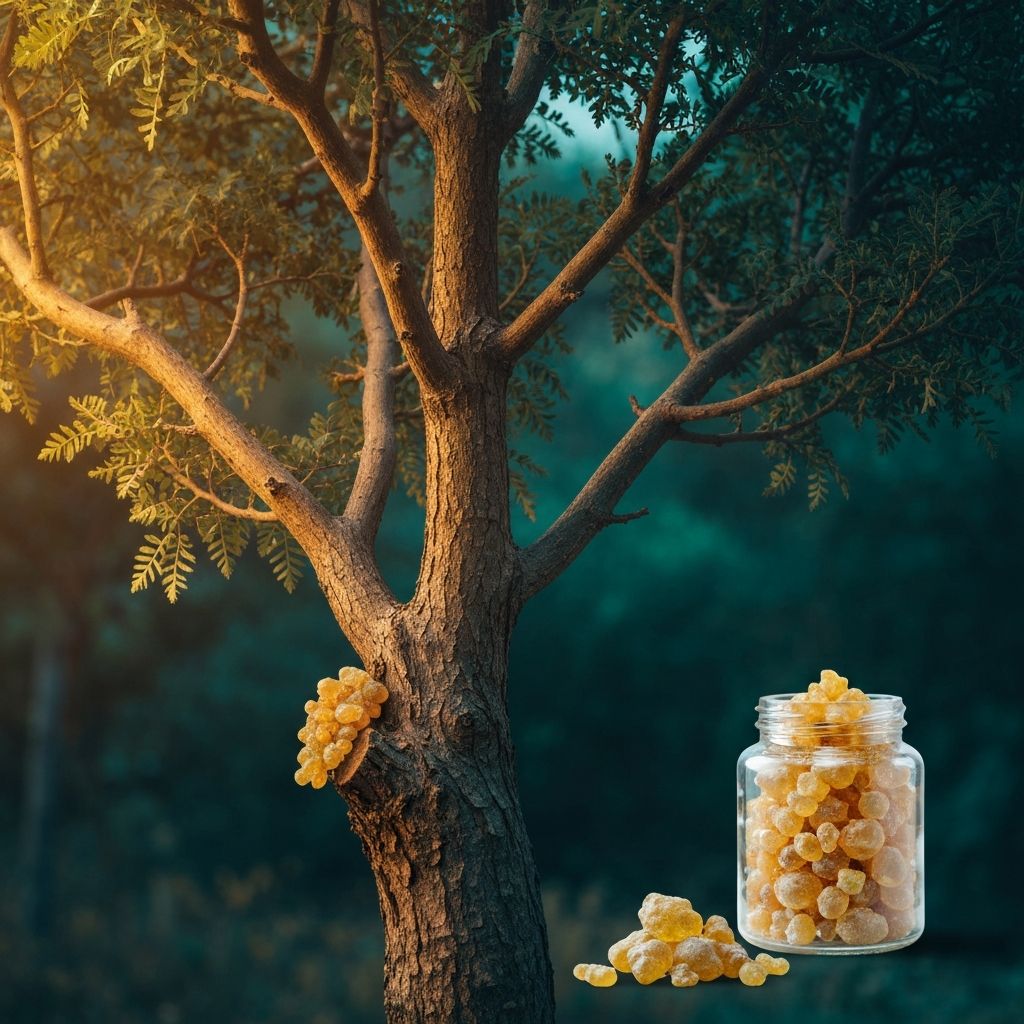
The Boswellia Tree
Boswellia species are trees native to regions of Africa and the Middle East, particularly the Arabian Peninsula, East Africa, and the Horn of Africa. These trees are renowned for producing a fragrant resin that has been harvested and valued for thousands of years. The resin is commonly known as frankincense and has held significant cultural, religious, and medicinal importance throughout history.
Resin Extraction and Composition
Frankincense resin is obtained through careful incision of the tree bark, allowing the resin to exude and harden. Traditional harvesting methods have been practiced for millennia, with documented records of frankincense trade dating back to ancient Egyptian times. The resin contains complex mixtures of compounds including:
- Boswellic acids: The primary bioactive compounds, with over ten different boswellic acid variants identified
- Volatile oils: Including incensole and related terpenes responsible for the characteristic aroma
- Polysaccharides: Complex carbohydrates contributing to the resin's properties
- Sesquiterpenes: Aromatic hydrocarbons with various biological properties
- Gum components: Contributing to the resin's structural characteristics
Historical and Cultural Significance
Frankincense holds profound historical importance. It was one of the precious gifts presented to the newborn Jesus in Christian tradition. In Islamic tradition, frankincense remains important in religious practice. Ancient Egyptians used frankincense in religious ceremonies and as part of embalming practices. In Ayurvedic medicine, Boswellia (known as "shallaki") has been incorporated into formulations for centuries. Traditional Chinese Medicine similarly integrated Boswellia resin into its pharmacopeia.
Boswellic Acids and Their Properties
Contemporary research has focused particularly on boswellic acids, which appear to be the primary bioactive compounds. Different boswellic acid variants demonstrate different properties and potencies. Research has investigated how these compounds interact with cellular and tissue-level processes:
- Cellular signaling modulation: Boswellic acids appear to influence various cellular communication pathways
- Enzymatic interactions: Research suggests interactions with specific enzymes involved in various physiological processes
- Antioxidant activity: The compounds demonstrate properties that may neutralize reactive oxygen species
- Biological cascade effects: Initial interactions may initiate sequences of biological responses
Scientific Investigation and Evidence
Over the past two decades, scientific interest in Boswellia and boswellic acids has increased substantially. Researchers have conducted studies examining extraction methods, standardization of boswellic acid content, bioavailability, and various application contexts. Important research findings include investigations into specific boswellic acid variants and their relative potencies.
As with all botanical compounds, evidence for Boswellia is evolving. Research continues to clarify mechanisms of action, optimal dosing approaches, and individual variation in response. Current evidence suggests that standardized extracts containing specific boswellic acid profiles may be more effective than crude resin preparations, though research in this area continues.
Traditional and Contemporary Use
Frankincense resin is traditionally used in various forms including direct combustion for aroma (incense), preparation as a tea or decoction, and incorporation into oil preparations. Contemporary applications often involve standardized extracts designed to provide consistent boswellic acid content. Traditional knowledge systems provide valuable context for understanding how Boswellia has been integrated into wellness practices over centuries.
Important Context
This article presents educational information about Boswellia and its bioactive compounds. This is not medical advice. Individual responses to Boswellia preparations vary significantly based on numerous factors including health status, genetics, and concurrent medications. If Boswellia is part of your wellness considerations, consult with a healthcare professional regarding your specific circumstances and appropriate use.
Not a medicinal product. Consult a doctor before use.